Physical anthropomorphism (but not gender presentation) influences trust in household robots.
Published in 2025
Holbrook, C., Krishnamurthy, U., Maglio, P., & Wagner, A. R. (2025). Physical anthropomorphism (but not gender presentation) influences trust in household robots. Computers in Human Behavior: Artificial Humans, 3.
Overtrust in AI recommendations about whether or not to kill: Evidence from two human-robot interaction studies.
Published in 2024
Holbrook, C., Holman, D., Clingo, J. & Wagner, A. R. (2024). Overtrust in AI recommendations about whether or not to kill: Evidence from two human-robot interaction studies. Scientific Reports, 14, 19751.
Validation and evacuee modeling of virtual robot-guided emergency evacuation experiments.
Published in 2024
Yin, Y., Nayyar, M., Holman, D., Lucas, G., Holbrook, C., & Wagner, A. (2024, June 24). Validation and evacuee modeling of virtual robot-guided emergency evacuation experiments. PsyArXiv.
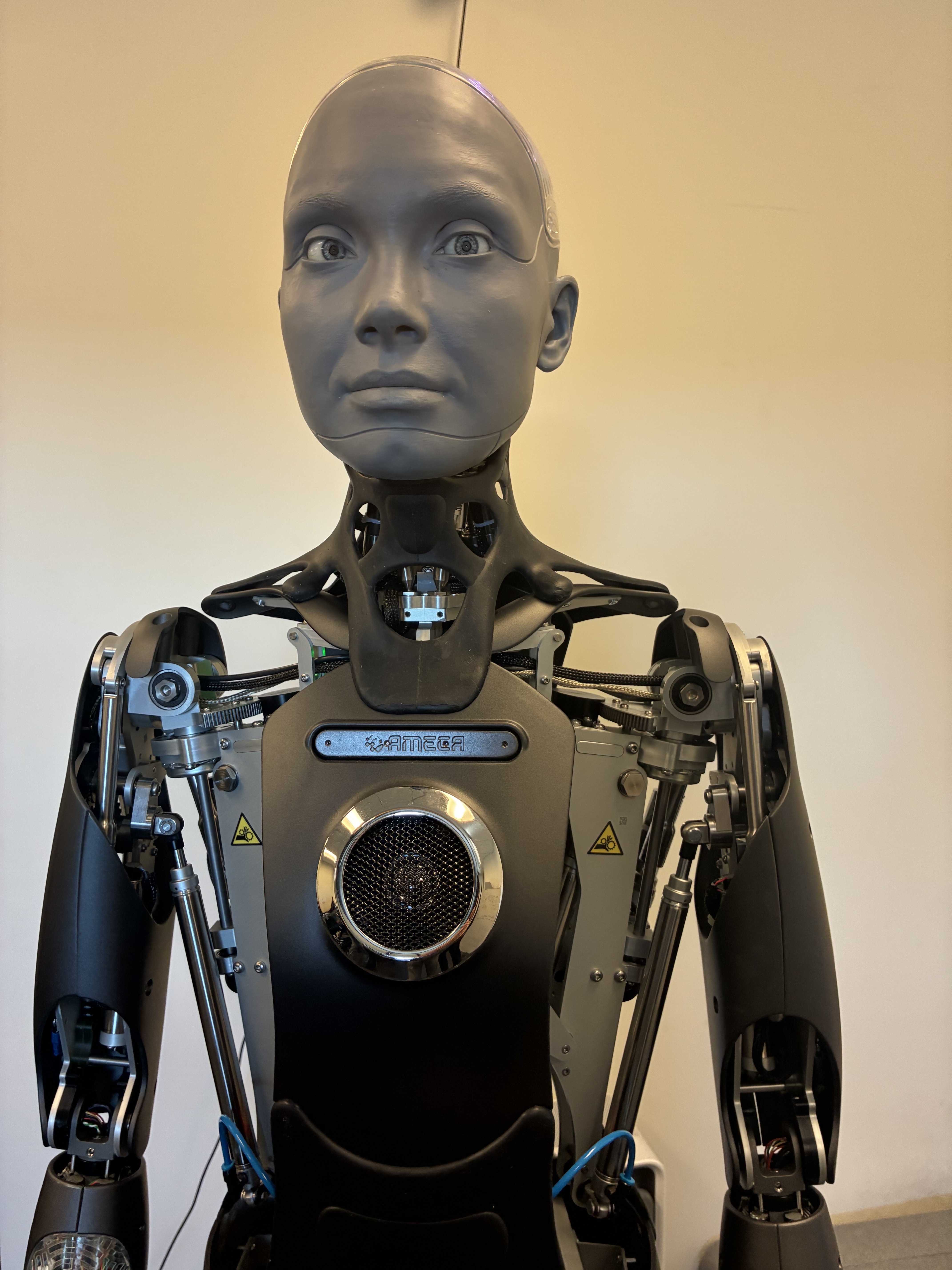
This advanced humanoid is controlled by an LLM and capable of both spontaneous, open-ended human-robot interaction and experimentally controlled, consistent responsiveness. The robot can produce lifelike movement, including microexpressions.
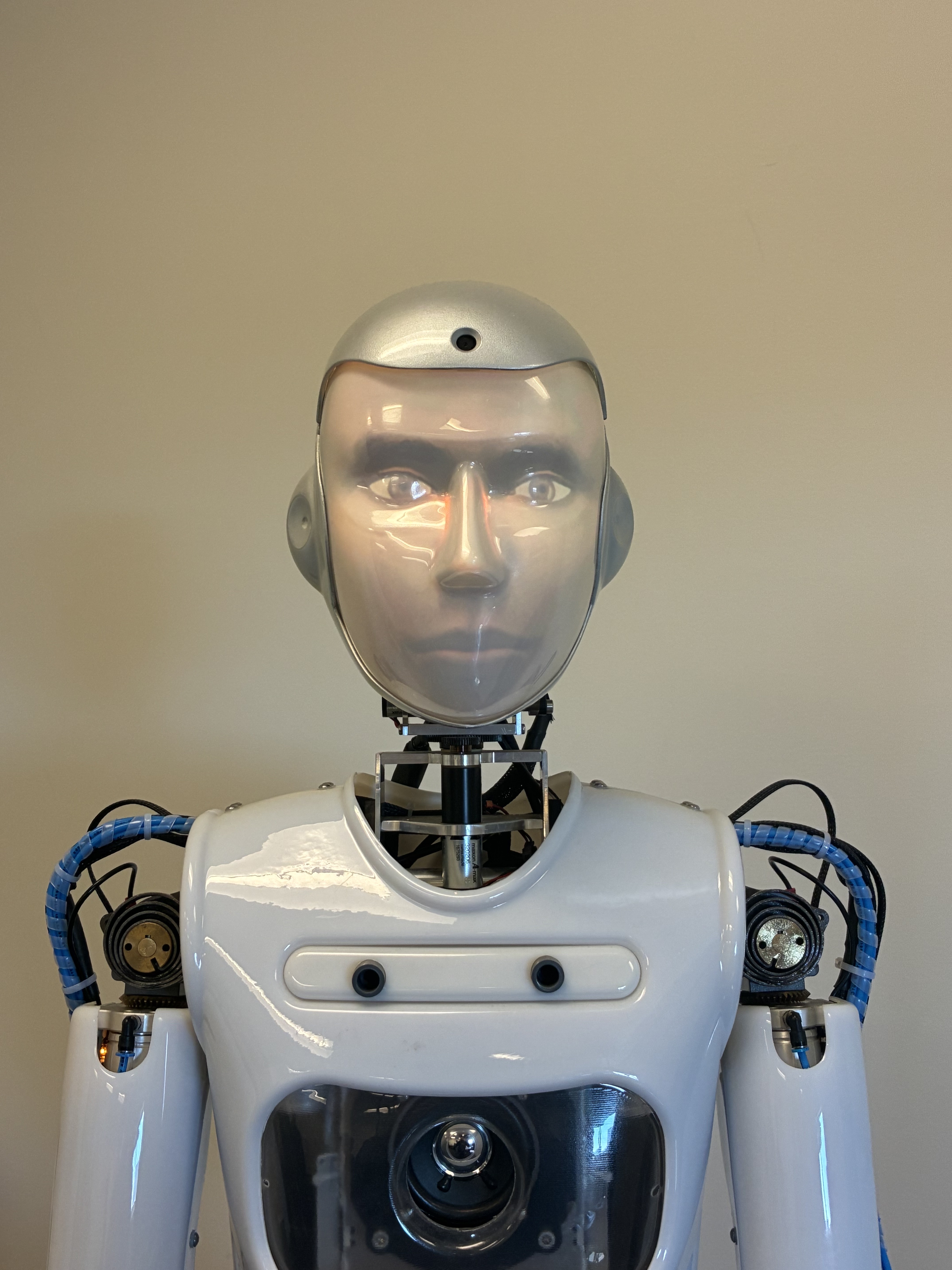
RoboThespian
Humanoid with Variable Face
This humanoid uses a rear-projected, translucent 3D mask to display both animated facial expressions and varying social characteristics (i.e., gender, race, age or ethnicity).
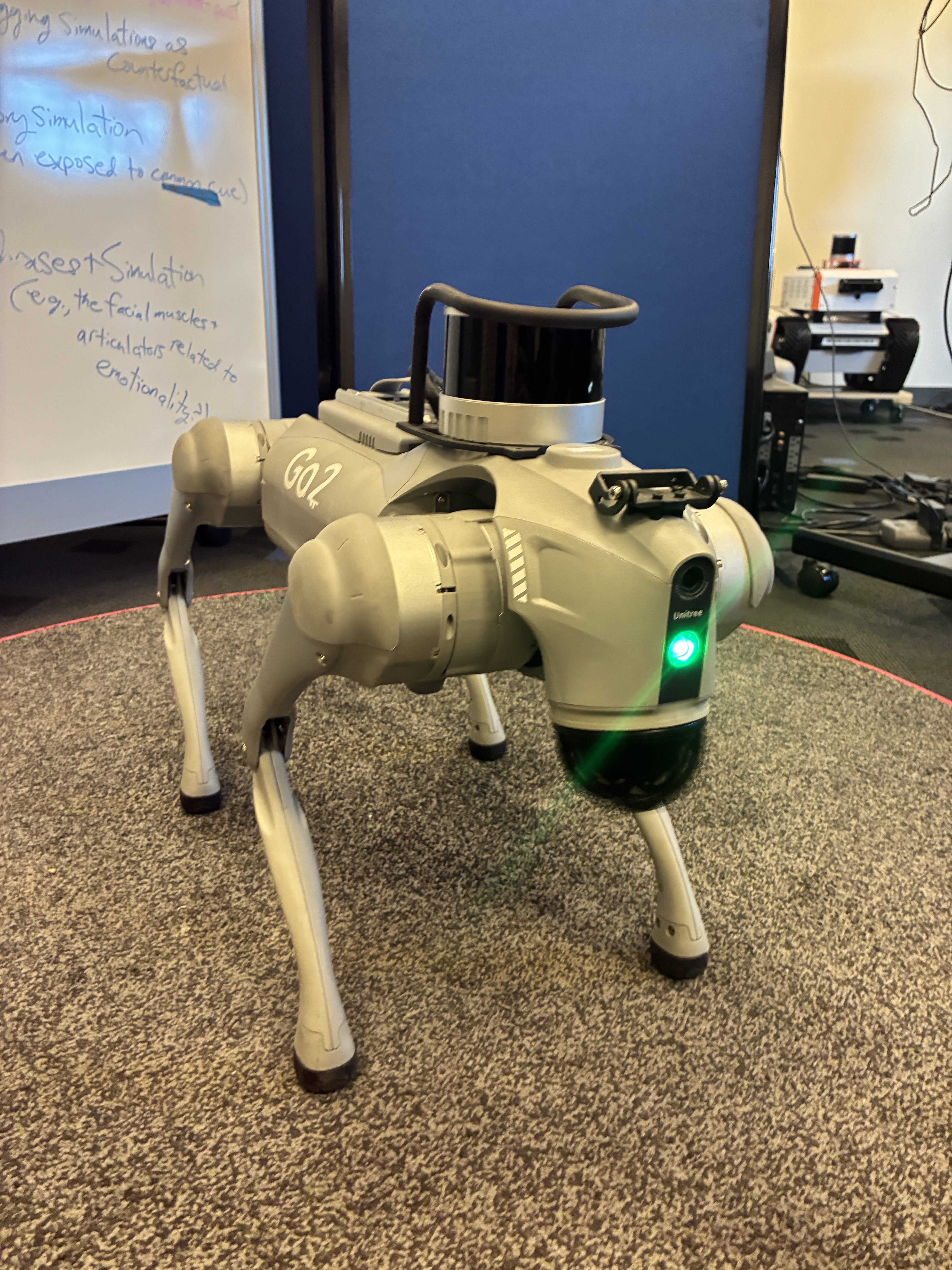
Unitree Go2
Quadrupedal Mobile Robot
Our Unitree Go2 quadrupedal mobile robot enables us to conduct field research assessing effects of animorphic design features likely to evoke psychological associations with dogs.
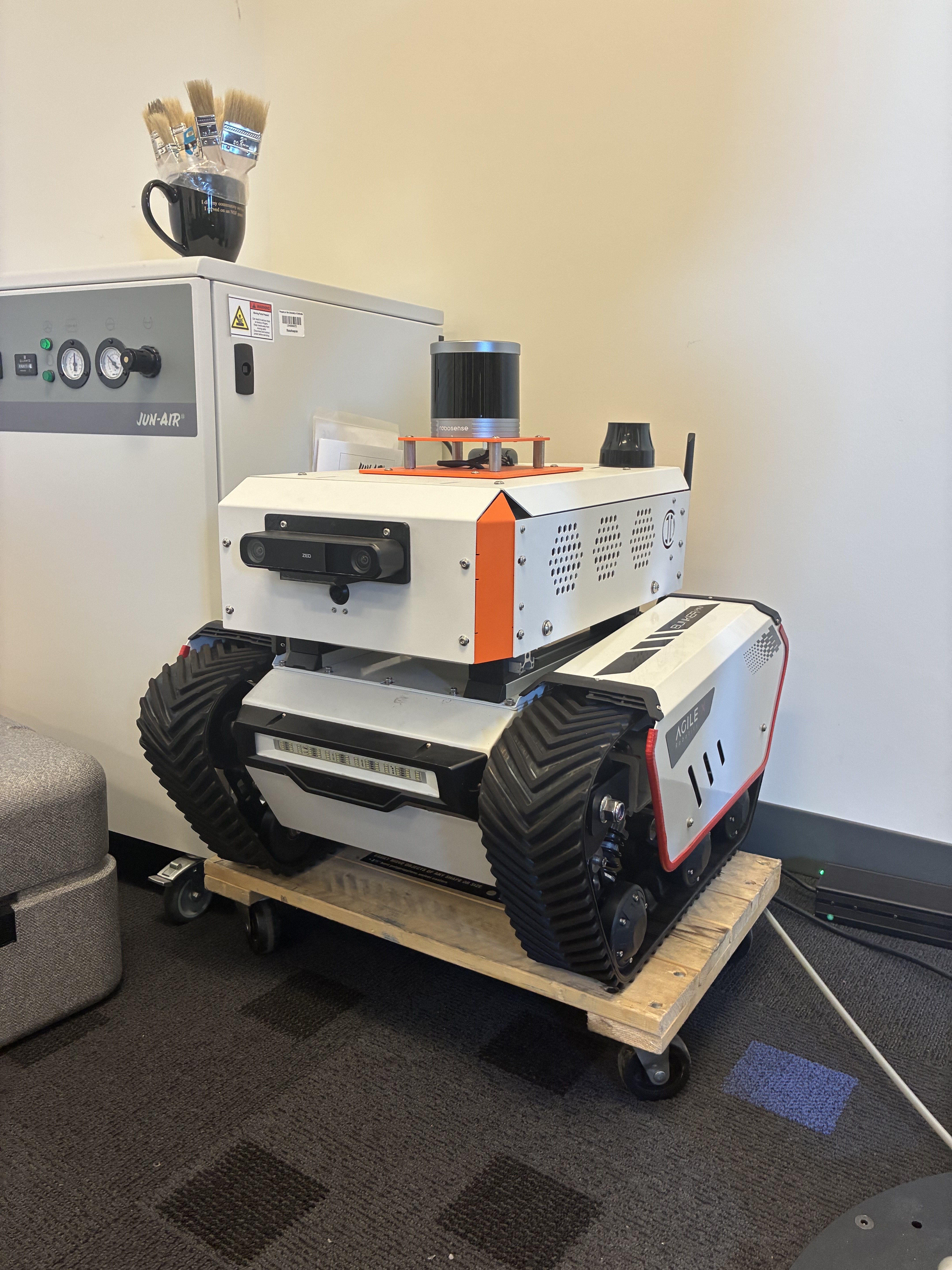
Bunker Mini
Track-based Mobile Robot
The Bunker Mini permits us to conduct field research with mobile robots which do not possess anthropomorphic or animorphic design features.
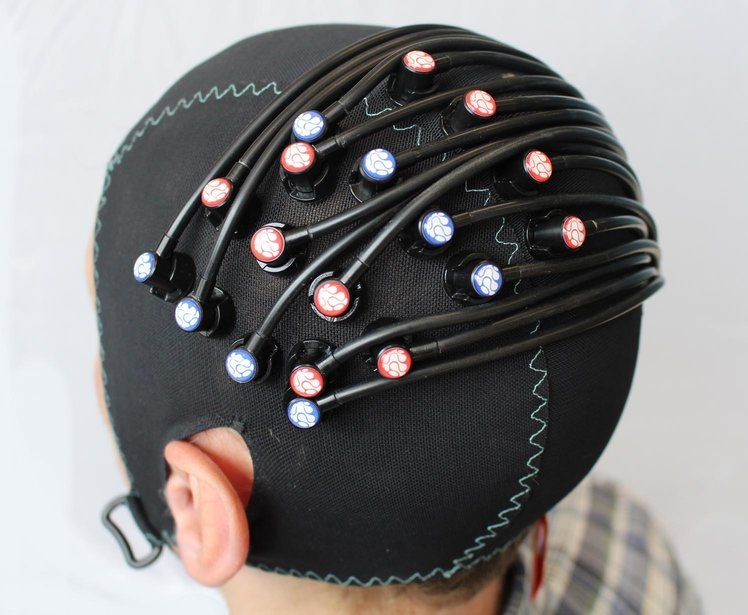
Functional Near-Infrared Spectroscopy
fNIRS
This non-invasive brain imaging technique measures local blood oxygen changes in the brain to track neural activity. We use fNIRS to assess neural correlates of overreliance on AI.
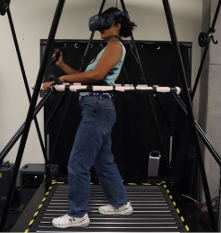
Embodied Virtual Reality
Infinadeck Treadmill, HTC Vive
We use immersive VR to study naturalistic human-AI decision-making, including life-or-death contexts (e.g., fire or active shooter evacuations) which would not otherwise be feasible to simulate.